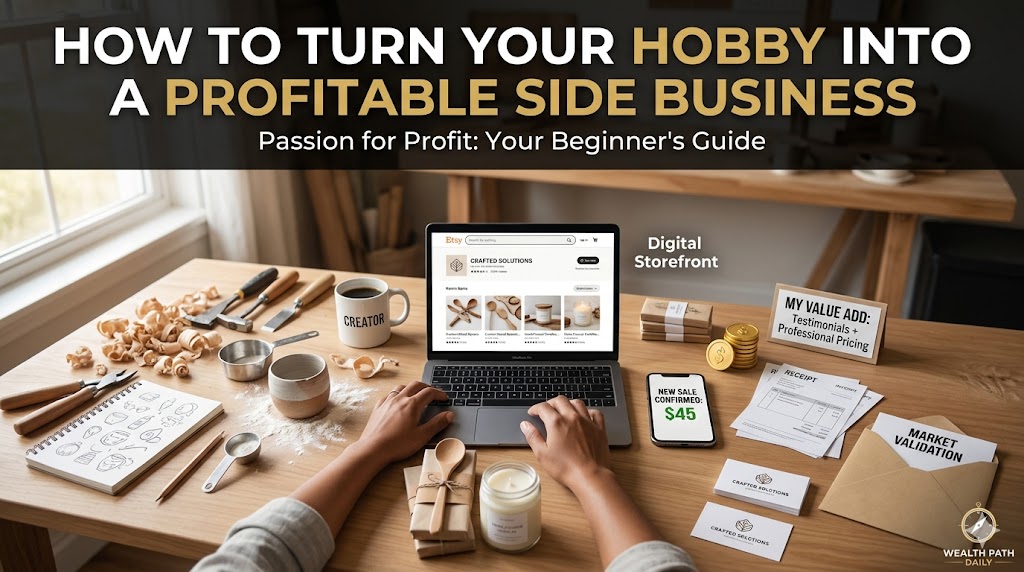
We have all heard the old cliché: “Choose a job you love, and you will never have to work a day in your life.” While that quote looks great on a motivational poster, the reality is a bit more complex. When you are stuck in a demanding 9-to-5 job, coming home to knit, code, bake, or build furniture in your garage is a vital escape. It is how you decompress. But what if that evening escape could become the key to your financial freedom?
The creator economy and the digital age have made it easier than ever to monetize your passions. However, transforming a weekend pastime into a legitimate, cash-flowing business requires a massive shift in strategy. If you just blindly start trying to sell your creations, you risk ruining the joy of your hobby while making zero profit.
Here at Wealth Path Daily, we are obsessed with helping you build sustainable, diversified income streams. If you are ready to bridge the gap between passion and profit, here is your comprehensive guide to turning your favorite hobby into a lucrative side business.
The Crucial Shift: Hobbyist vs. Entrepreneur
Before you buy a domain name or design a logo, you must fundamentally change how you view your craft.
A hobby is self-serving. You do it entirely for your own enjoyment, on your own timeline, and you absorb the costs because it brings you peace.
A business is customer-serving. It exists to solve a problem, fulfill a need, or provide value to someone else. When you transition to a business, you have to care about deadlines, profit margins, customer feedback, and market demand. You are no longer just a creator; you are a marketer, a financial planner, and a customer service representative.
If you are prepared for that mental shift, you are ready for step one.
Step 1: Validate Your Market (Will People Actually Pay?)
Just because you love doing something does not automatically mean there is a paying market for it. Before you invest time and capital, you must validate your idea.
Find the Intersection of Passion and Profit
Look at what you create. Is it a physical product (like hand-poured candles or custom woodworking)? Is it a digital asset (like graphic design or a niche blog)? Or is it a service (like photography or dog training)?
Ask yourself: Who is the exact person that would pull out their credit card for this? ### Conduct Low-Cost Reconnaissance
Do not guess—look at the data. Go to platforms like Etsy, Pinterest, or local Facebook community groups. Are other people successfully selling similar items or services? Competition is actually a good sign; it proves that a paying market exists. Look at your competitors’ reviews to see what customers love and, more importantly, what they are complaining about. That gap is where your new business will thrive.
Step 2: Build a Minimum Viable Product (MVP)
The biggest mistake first-time entrepreneurs make is sinking thousands of dollars into inventory, expensive equipment, or legal fees before they have made a single sale.
Instead, build a Minimum Viable Product (MVP). This is the simplest, most basic version of your offering that you can sell to test the waters.
- If you love baking: Do not sign a lease for a commercial bakery. Bake a small batch in your kitchen and try to sell them at a local weekend farmer’s market.
- If you love writing: Do not spend three years writing a novel in isolation. Start a targeted WordPress blog, publish consistent content, and see if you can attract a dedicated readership first.
- If you love graphic design: Offer to design logos for three local businesses at a discounted rate to build your portfolio and test your client management skills.
The goal of the MVP is to get your first paying customer as quickly and cheaply as possible.
Step 3: Establish Your Digital Storefront
Once you have validated that people will pay for your work, it is time to establish a professional digital presence. You do not need to be a tech wizard to do this.
Register a clean, memorable domain name. Set up a simple, fast-loading website (platforms like WordPress are excellent for this, especially when paired with a clean, professional theme). Make sure your website clearly explains what you do, who it is for, and how they can buy it. In 2026, if you do not have a professional online presence, consumers will hesitate to trust you with their money.
5 Actionable Tips to Launch Your Side Business
Ready to take the leap? Follow this actionable checklist to set your new venture up for success:
- Separate Your Finances Immediately: The moment you decide this is a business, open a separate business checking account. Do not co-mingle your personal rent money with your business expenses. This makes tracking your profitability (and tax preparation) infinitely easier.
- Master the Art of Pricing: Do not undercharge just because you are new. Calculate the cost of your materials, factor in a reasonable hourly wage for your labor, and add a profit margin. Competing solely on being the “cheapest” is a race to the bottom that will quickly lead to burnout.
- Protect Your “Fun” Time: Turning a hobby into a job can drain the joy from it if you aren’t careful. Set strict business hours for your side hustle, and make sure you still carve out time to enjoy the craft purely for yourself, without a price tag attached.
- Gather Testimonials Early: Social proof is your strongest marketing tool. Over-deliver for your first few customers, and politely ask them to leave a review or provide a testimonial. Display these prominently on your website.
- Leverage Organic Marketing: Keep your overhead low. Instead of paying for expensive ads right out of the gate, utilize SEO (Search Engine Optimization) on your blog, or build an organic following on visual platforms like Instagram or Pinterest by documenting your creative process behind the scenes.
Conclusion
Turning your hobby into a profitable side business is one of the most rewarding ways to accelerate your financial goals. It allows you to build an income stream using skills you already possess and genuinely enjoy.
Remember, the transition from hobbyist to business owner is a marathon, not a sprint. Start by validating your market, launching a low-risk MVP, and establishing a professional digital presence. It will require late nights and disciplined effort, but the feeling of earning your first dollar from something you created with your own hands is an unparalleled milestone on your Wealth Path.
Stay tuned to Wealth Path Daily for more actionable personal finance strategies designed to help you build a richer, more intentional life.