It is 5:30 PM on a busy Tuesday. You are exhausted from a long workday, your refrigerator is a wasteland of mismatched condiments, and the dreaded question inevitably arises: “What are we doing for dinner?” Before you know it, your thumb is opening a food delivery app. An hour later, a $35 charge hits your credit card for a meal that is only moderately satisfying. We have all been there.
Here at Wealth Path Daily, we spend a lot of time discussing high-level financial strategies, from maximizing your retirement accounts to building passive income. However, one of the most insidious leaks in any personal budget isn’t a complex financial misstep—it is the daily cost of convenience food. Food ranks as one of the largest household expenses, and without a plan, it can easily spiral out of control.
The good news? There is a remarkably simple, highly effective strategy to plug this budget leak, improve your health, and reclaim your evenings: Meal Prepping.
If you are tired of watching your hard-earned money vanish bite by bite, here is your comprehensive beginner’s guide to meal prepping.
Why Meal Prep is a Financial Game-Changer
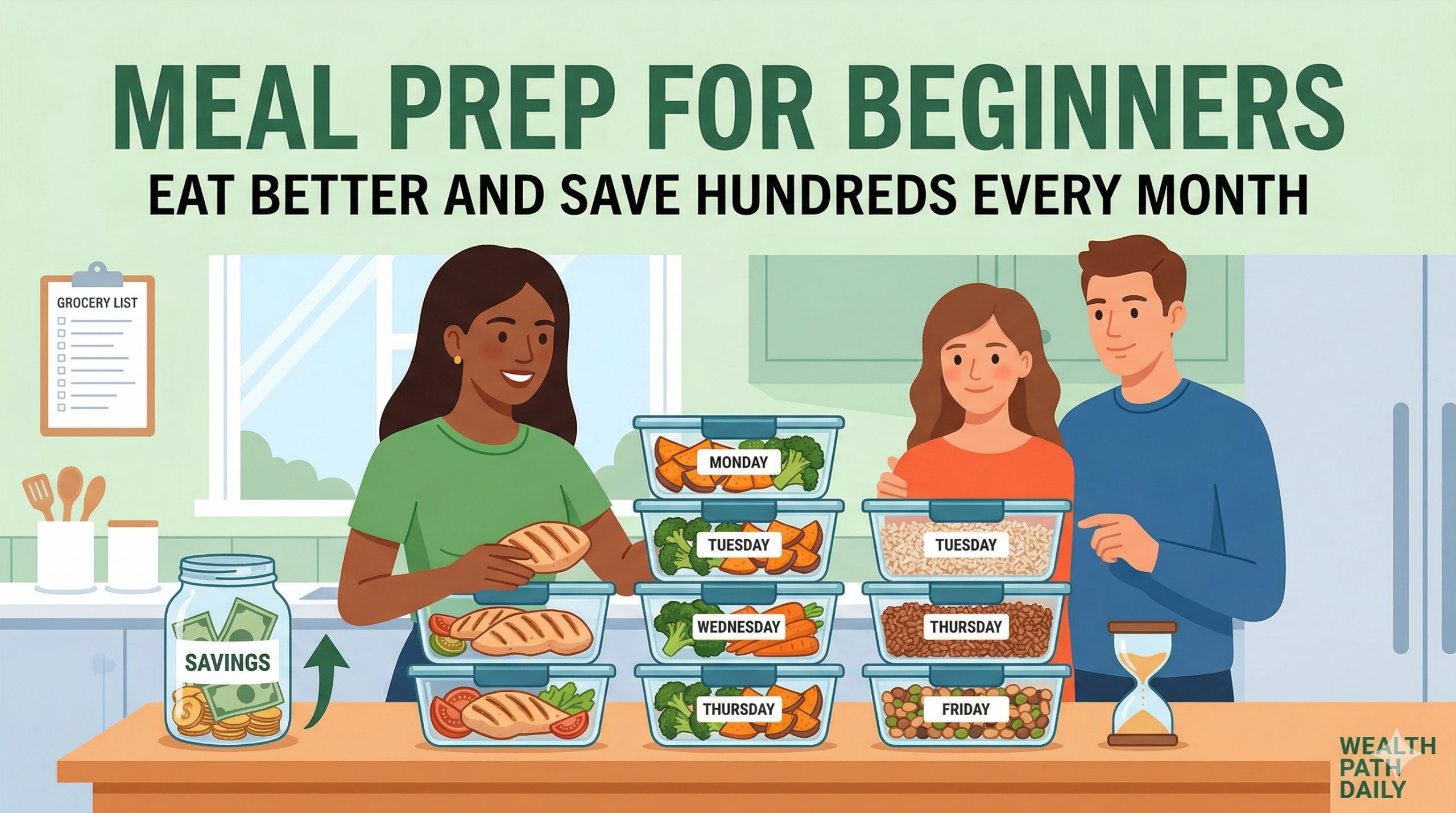
Meal prepping is often associated with fitness influencers carrying around neatly packed containers of chicken and broccoli. But at its core, meal prepping is an essential personal finance tool. Here is why it transforms your budget.
Slashing the “Takeout Tax”
The markup on restaurant food and delivery is astronomical. When you order a $15 burger through an app, you are also paying for service fees, delivery fees, and the driver’s tip, often pushing the total well over $25. By preparing your meals in advance, you are buying ingredients at their base cost. A home-cooked meal that costs you $3 to $4 per serving is replacing a $20 takeout habit. Do that just three times a week, and you have saved roughly $200 a month.
Eliminating Food Waste
Have you ever bought a bag of fresh spinach with the best intentions, only to throw it away a week later when it turns into green sludge? You are not alone. Food waste is literally throwing money in the trash. Meal prepping forces you to buy exactly what you need and use exactly what you buy. Every ingredient has a designated purpose, ensuring your grocery budget is fully optimized.
The Beginner’s Guide to Meal Prepping (Keep It Simple)
The biggest mistake beginners make is trying to do too much too fast. Do not attempt to cook 21 gourmet meals for the entire week on your first Sunday. You will end up overwhelmed, exhausted, and likely to quit. Follow these steps to build a sustainable habit.
1. Start Small and Strategize
Identify your weakest link. If you always buy lunch at the office, focus strictly on prepping five lunches for the workweek. If dinner is your downfall, prep three dinners to get you through the busiest days (like Monday, Tuesday, and Wednesday). Leave room for flexibility later in the week.
2. Embrace “Ingredient Prepping”
You do not have to cook full, composed meals to be a successful meal prepper. Instead, try “ingredient prepping.” This involves washing and chopping vegetables, cooking a large batch of a versatile grain (like rice or quinoa), and preparing a core protein (like roasting a pan of chicken breasts or baking tofu). Having these ready-to-go components in the fridge means you can assemble a healthy, cheap meal in five minutes on a busy Wednesday night.
3. Keep Your Recipes Simple
Save the complex, multi-step culinary masterpieces for the weekend. For your weekly meal prep, rely on simple formulas. A great baseline is the “Rule of Three”: one protein, one complex carbohydrate, and one vegetable. Sheet pan meals, slow cooker chili, and hearty pasta bakes are excellent, scalable options that require minimal active cooking time.
Actionable Steps for Your First Meal Prep Session
Ready to get started? Here is your step-by-step action plan to execute a flawless, budget-friendly meal prep routine this weekend.
- Take Inventory: Before you look at recipes or write a grocery list, “shop” your own pantry and freezer. What do you already have that needs to be used? Build your meals around these existing assets to immediately lower your grocery bill.
- Plan the Menu: Select 2-3 simple recipes. Write down exactly what you will eat for the meals you are targeting (e.g., lunches Monday through Friday).
- Create a Strict Grocery List: Write down the exact ingredients you need. When you go to the store, stick to the list with militant discipline. Do not wander down the snack aisle.
- Time Block Your Prep: Dedicate a specific window of time—like Sunday afternoon from 2:00 PM to 4:00 PM—to do your chopping, cooking, and portioning. Put on a podcast or your favorite playlist and make it an enjoyable weekly ritual.
- Store Properly: Invest in a set of reliable, airtight containers. Glass is ideal for reheating, but high-quality BPA-free plastic works perfectly well for beginners. Let your food cool completely before sealing the containers to prevent soggy meals.
Budget-Friendly Staples to Build Your Meals Around
To truly maximize the financial benefits of meal prepping, focus your recipes around ingredients that offer the highest nutritional value for the lowest cost.
- Beans and Lentils: The ultimate budget superfood. They are incredibly cheap, packed with protein and fiber, and can be used in soups, salads, and bowls.
- Rice and Oats: Buying grains in bulk is one of the smartest financial moves you can make at the grocery store.
- Seasonal Vegetables: Produce that is in season is always cheaper and tastes better. Root vegetables like sweet potatoes and carrots are incredibly affordable and filling.
- Eggs: Even with occasional price fluctuations, eggs remain one of the most cost-effective sources of high-quality protein available.
Conclusion
Taking control of your daily food choices is one of the fastest, most effective ways to give yourself a raise. Meal prepping does require a small upfront investment of your time and energy, but the return on that investment is massive.
By dedicating just a couple of hours on the weekend to plan and prepare, you are eliminating the daily stress of figuring out what to eat, dramatically improving the quality of your diet, and keeping hundreds of dollars in your bank account every single month.
Don’t overcomplicate it. Pick two easy recipes, write your grocery list, and commit to prepping your lunches this week. You might be surprised at how quickly this simple habit transforms your financial life.
Stay tuned to Wealth Path Daily for more actionable personal finance strategies designed to help you build a richer, more intentional life.