
We have all experienced the grocery store standoff. You are standing in the aisle, holding a brightly colored, heavily advertised box of cereal in one hand, and a slightly plainer, suspiciously similar store-brand box in the other. The name brand costs $5.49. The generic costs $3.19.
Your brain’s frugal side screams to buy the generic, but a quiet voice of doubt whispers, “What if it tastes like cardboard? What if it ruins the recipe?”
Here at Wealth Path Daily, our core philosophy is that you should give every single dollar a job. But being intentional with your money does not mean you have to buy the cheapest possible item 100% of the time. True financial optimization is about knowing the difference between a smart saving and a false economy.
The secret to mastering your grocery budget is learning exactly when to ruthlessly cut costs with generics, and when spending a few extra dollars on the name brand is a legitimate investment in quality and sanity. Let’s break down the ultimate guide to the name brand vs. generic debate.
The Secret World of Store Brands
Before we dive into the specific items, it helps to understand how the consumer goods industry actually works.
Many consumers mistakenly believe that generic or store-brand products are manufactured in subpar, cut-rate facilities. In reality, a massive percentage of store-brand products are manufactured in the exact same factories, on the exact same assembly lines, as their premium name-brand counterparts. This practice is known as “white-labeling.”
When you buy a name-brand product, you are often paying a premium for the marketing, the colorful packaging, and the commercials—not necessarily a superior formula. However, this is not a universal rule. In some categories, the name brand genuinely uses higher-quality materials or proprietary recipes.
When You Should ALWAYS Buy Generic
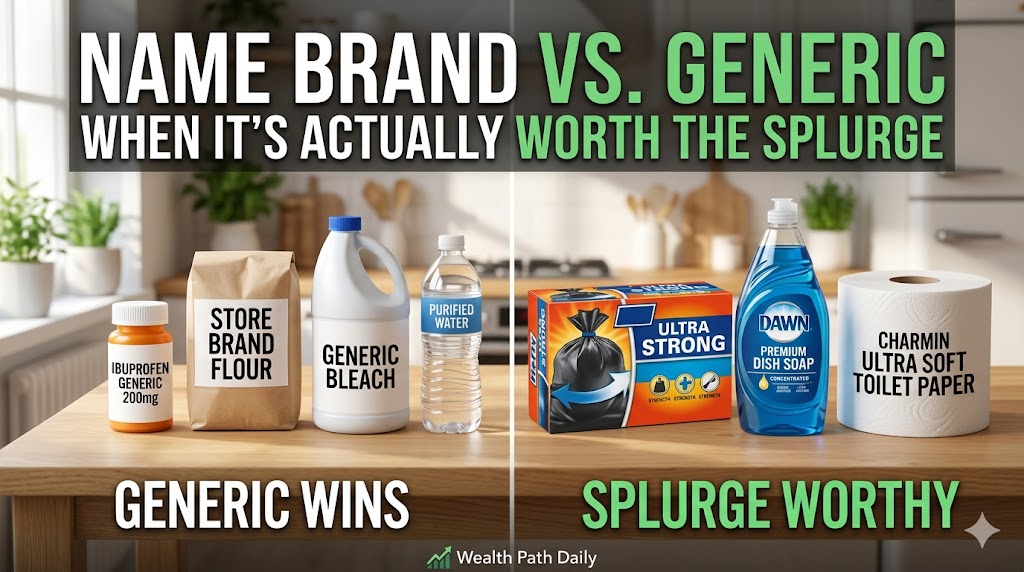
For these household categories, the difference between the name brand and the generic is practically zero. Save your money and opt for the store brand every single time.
Over-the-Counter Medications
Whether it is ibuprofen, allergy pills, or cold medicine, the generic versions are the exact same product as the name brands. By law, the FDA requires generic medications to have the identical active ingredients, strength, and dosage form as the original. You are paying strictly for the logo on the box. Always buy generic.
Basic Baking Staples
Salt, sugar, flour, and baking soda are single-ingredient items. A chemical compound does not change just because it is put in a fancier bag. While professional pastry chefs might have specific preferences for the exact milling of their flour, for the average home cook, generic baking staples perform flawlessly.
Cleaning Supplies (Bleach and Ammonia)
Basic chemical cleaners like bleach, ammonia, and rubbing alcohol are regulated commodities. A gallon of generic bleach has the exact same chemical makeup and disinfecting power as the name brand. Save the extra two dollars; the germs will not know the difference.
Bottled Water
If you must buy bottled water instead of using a reusable bottle and a home filter, do not pay a premium for a fancy label. Unless you are specifically buying mineral water for a distinct taste profile, generic purified water is just as hydrating and safe as the brands backed by celebrity endorsements.
When It’s Actually Worth the Splurge
Sometimes, trying to save a dollar will end up costing you more in time, frustration, and wasted product. Here is where the name brand is almost always worth the splurge.
Trash Bags
There are few household disasters more infuriating than pulling a full trash bag out of the can, only to have the bottom instantly tear open, spilling garbage across your kitchen floor. Name-brand trash bags invest heavily in reinforced plastics, stretchable seams, and reliable drawstrings. The generic versions are notorious for punctures and rips. Splurge on the name brand to protect your sanity.
Dish Soap
If you have ever tried to wash a greasy pan with a watery generic dish soap, you know it takes half the bottle to get any real suds. Premium name brands (like Dawn) have highly concentrated, proprietary grease-cutting formulas. Because you use significantly less soap per wash, the more expensive name brand actually ends up costing you less per year than constantly replacing the cheap, diluted generic.
Toilet Paper
When it comes to personal comfort, the generic tax is real. Cheap store-brand toilet paper is often thin, rough, and requires you to use twice as much per bathroom trip. Spending a little extra on a high-quality name brand provides a better experience and surprisingly comparable longevity per roll.
Certain Condiments and Sauces
When a product’s entire value is based on a complex, subjective flavor profile, generics often fall short. Generic ketchup, for example, rarely matches the specific vinegar-to-sweetness ratio of the leading brands. The same applies to specific pasta sauces, mayonnaise, and certain cereals. If a specific brand brings you genuine joy, buy it.
Actionable Tips for Testing the Waters
If you are ready to start trimming your grocery budget but feel hesitant about abandoning your favorite brands, use these actionable tips to transition smoothly:
- The Blind Taste Test: If your family refuses to eat generic cereal or snacks, buy one box of the generic and pour it into a clear, unbranded container. If they eat it without noticing a difference, you have just found a permanent budget hack.
- Compare the Ingredients List: Do not just look at the front of the box; compare the back. If the first five ingredients on the generic and the name brand are identical and in the exact same order, they are likely the same product.
- Always Check the Unit Price: Sometimes, a massive sale on a name-brand item will make it cheaper than the store brand. Always look at the shelf tag for the “price per ounce” to determine the true winner.
- The “One and Done” Rule: Commit to trying the generic version of a product just once. If you hate it, give yourself permission to go back to the name brand next time, guilt-free. You only risk a few dollars, but you stand to gain years of savings if you like it.
Conclusion: Spend Intentionally, Save Strategically
The great Name Brand vs. Generic debate does not have a one-size-fits-all answer. Personal finance is highly personal, and your budget should reflect what you actually value.
By confidently buying generics for regulated items like medications and single-ingredient staples, you free up the cash in your budget to comfortably afford the premium dish soap, the heavy-duty trash bags, and the name-brand ketchup you actually love. Give every dollar a job, evaluate your purchases critically, and enjoy the financial peace that comes from a perfectly optimized grocery cart.