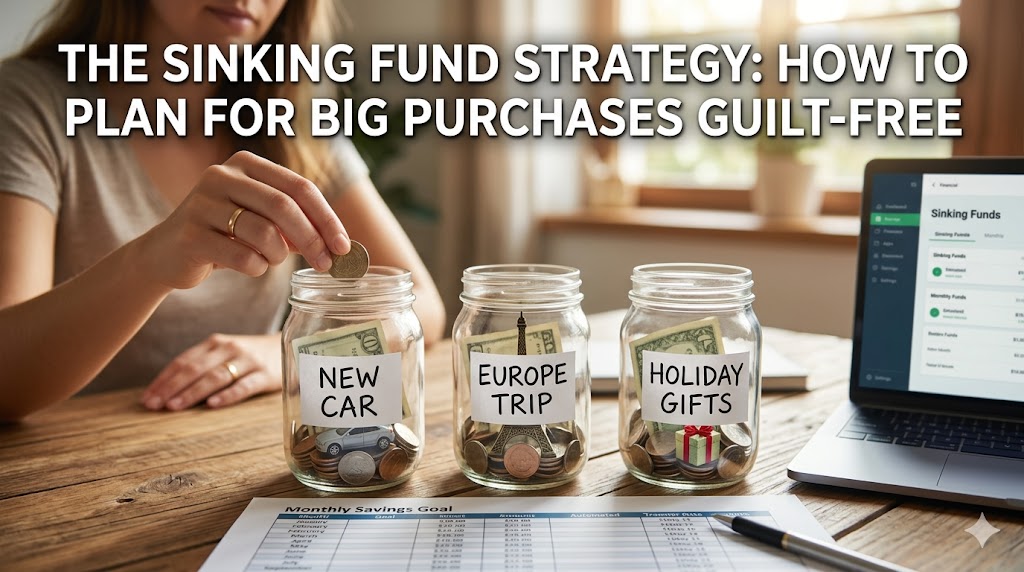
We have all experienced that specific sinking feeling in the pit of our stomachs. You walk out to your mailbox, open an envelope, and stare at a massive bill for your annual car insurance premium. Or, you look at the calendar, realize the holiday season is only two months away, and panic about how you are going to afford gifts for your family.
These expenses are not emergencies. They happen at the exact same time, every single year. Yet, because they do not fit neatly into a standard monthly budget, they often feel like sudden financial catastrophes, forcing us to swipe our credit cards and accumulate high-interest debt.
Here at Wealth Path Daily, we believe that your money should bring you peace of mind, not panic. If you are tired of your budget being derailed by predictable, large expenses, it is time to implement one of the most effective tools in personal finance: The Sinking Fund.
If you want to learn how to buy a new laptop, take a dream vacation, or pay your property taxes without an ounce of financial guilt, here is your complete guide to mastering the sinking fund strategy.
What Exactly is a Sinking Fund?
In corporate finance, a sinking fund is a pool of money set aside by a corporation to help repay previous issues of bonds. But in personal finance, the definition is much simpler.
A sinking fund is a strategic savings account where you set aside a small, fixed amount of money every single month for a specific, known future expense. You are taking a large, intimidating financial hurdle and breaking it down into tiny, manageable monthly steps.
Sinking Fund vs. Emergency Fund
Many beginners confuse sinking funds with emergency funds, but they serve two entirely different purposes:
- An Emergency Fund is a financial shield. It is a pile of cash reserved strictly for unknown and unexpected events, like a sudden job loss, an unexpected trip to the ER, or a blown transmission.
- A Sinking Fund is a financial steering wheel. It is money saved for known and expected events, like Christmas, a summer vacation, or an upcoming wedding.
You should never raid your emergency fund to pay for a planned vacation. That is exactly what a sinking fund is for.
Why Sinking Funds Are a Financial Superpower
Implementing this strategy completely changes the psychology of how you spend your money. Here is why sinking funds are a cornerstone of wealth building.
1. They Eliminate Financial Guilt
Have you ever saved up for a vacation, but spent the entire trip worrying about how much the dinners and excursions were costing? When you use a sinking fund, the money is already spoken for. You gave that cash a specific job months ago. When the time comes to buy the plane tickets or pay for the hotel, you can spend the money joyfully and guilt-free, knowing it will not impact your ability to pay your rent next month.
2. They Protect Your Emergency Fund
When people do not plan for irregular expenses like new tires or veterinary check-ups, they are forced to drain their emergency savings. By isolating these expected costs into sinking funds, you protect your actual emergency fund, ensuring it is there when a true crisis strikes.
3. They Smooth Out Your Cash Flow
Instead of having a “rich” month in March and a “broke” month in December, sinking funds level out your cash flow. You will no longer experience wild swings in your bank account balance because your monthly expenses will remain remarkably consistent all year long.
5 Common Categories for Sinking Funds
You can create a sinking fund for absolutely anything, but here are the most common categories where this strategy shines:
- The Holidays: Calculate what you spent on gifts, travel, and food last year. Divide that by 12, and save that amount starting in January.
- Auto Maintenance: Your car will need new brakes, oil changes, and registration renewals. Setting aside $50 to $100 a month ensures you never have to put these standard maintenance costs on a credit card.
- Home Repairs: Roofs leak, appliances break, and HVAC systems need servicing. Homeowners should always have a dedicated fund for property upkeep.
- Annual Premiums: If you pay your life insurance, auto insurance, or software subscriptions annually, you usually get a discount. A sinking fund helps you afford that lump-sum payment.
- Vacation and Travel: Want to take a $3,000 trip to Europe next summer? Start setting aside $250 a month right now.
Your Actionable Guide to Setting Up a Sinking Fund
Ready to take control of your variable expenses? Follow this simple, actionable checklist to set up your first sinking fund today.
- Define the Goal and Timeline: Identify the specific event you are saving for and exactly when you need the money. (Example: I need to buy a new $1,200 laptop for my freelance business in 10 months.)
- Do the Simple Math: Divide the total target amount by the number of months you have left. (Example: $1,200 divided by 10 months = $120 per month.)
- Open a Dedicated Account: Do not keep this money in your primary checking account; you will accidentally spend it on groceries. Open a separate High-Yield Savings Account (HYSA). Many modern online banks offer “bucket” or “vault” features that allow you to visually separate your money into different categories within one main account.
- Automate the Transfer: Discipline is fickle; automation is flawless. Log into your banking portal and set up a recurring automatic transfer. Have the $120 move from your checking to your sinking fund on the exact same day you get paid.
- Spend Without Remorse: When the 10 months are up, transfer the money back to your checking account, buy the laptop, and enjoy your purchase with zero financial stress.
Conclusion
The sinking fund strategy is the ultimate antidote to financial anxiety. By looking ahead, anticipating your future needs, and setting aside small amounts consistently, you take all the shock and surprise out of your annual budget.
Stop letting predictable expenses catch you off guard. Pick one upcoming financial goal today—whether it is a holiday, a premium, or a vacation—do the math, set up the automation, and experience the profound freedom of guilt-free spending.
Stay tuned to Wealth Path Daily for more actionable personal finance strategies designed to help you build a richer, more intentional life.