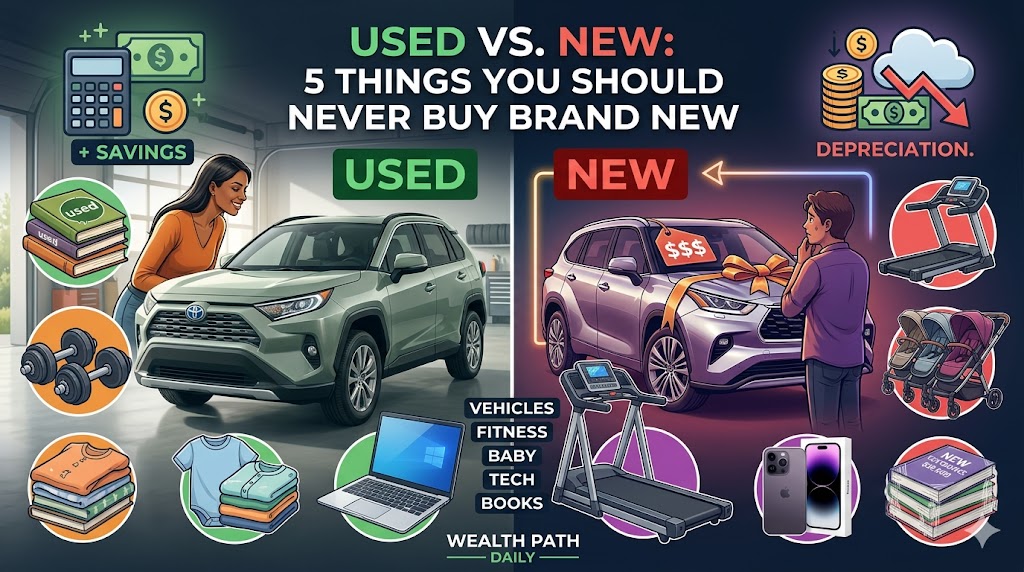
There is a distinct psychological thrill that comes with buying something brand new. Whether it is the legendary “new car smell,” the satisfying peel of a plastic screen protector, or the uncreased spine of a freshly printed book, we are culturally conditioned to associate “new” with “better.”
However, as anyone on the path to financial independence knows, the premium you pay for that fresh-out-of-the-box experience is often the enemy of wealth creation.
Here at Wealth Path Daily, our goal is to help you optimize your spending so you can maximize your saving and investing. Building wealth isn’t about extreme deprivation; it is about strategic allocation. One of the highest-impact strategies you can adopt is learning exactly when to pay retail, and when to let someone else absorb the initial cost of depreciation.
If you want to keep more of your hard-earned money without sacrificing quality of life, here are five things you should almost never buy brand new.
The Depreciation Trap
Before we dive into the list, it is crucial to understand why buying used is such a powerful financial tool: depreciation.
Depreciation is the rate at which an asset loses value over time. For most consumer goods, the steepest drop in value happens the exact moment the item goes from “new” to “owned.” By the time you carry a brand-new item out of the store, it is often worth 20% to 30% less than what you just paid for it. When you buy used, you allow the original owner to take that massive financial hit, allowing you to purchase the item closer to its actual, intrinsic value.
5 Things You Should Never Buy Brand New
1. Vehicles (The Classic Wealth Killer)
We have to start with the biggest offender. A brand-new car loses an average of 20% of its value in the first year alone, and roughly 60% of its value within the first five years. Financing a depreciating asset at a high interest rate is one of the most common roadblocks to financial freedom.
Instead of buying a vehicle fresh off the assembly line, look for a certified pre-owned car that is three to five years old. It will still have modern safety features, reliable technology, and plenty of life left under the hood, but you will pay a fraction of the sticker price.
2. Fitness Equipment
Every January, thousands of well-intentioned people buy $1,500 treadmills, stationary bikes, and rowing machines. By July, those same machines have become very expensive clothing racks.
Because fitness equipment is bulky and difficult to move, sellers on local online marketplaces are often desperate to get rid of it. You can easily find gently used, commercial-grade dumbbells, kettlebells, and cardio machines for 50% to 80% off their original retail price. Let someone else pay the “New Year’s Resolution” premium.
3. Baby Gear and Children’s Clothing
If you are a parent, you already know the truth: children grow at an astonishing rate. A newborn will cycle through clothing sizes in a matter of weeks. High chairs, bassinets, and baby swings are often only used for a few months before the child outgrows them.
Retailers charge a massive premium for baby items, playing on the emotions of new parents. Instead, tap into the robust secondary market. Consignment shops, local parent groups, and thrift stores are overflowing with pristine, barely-used baby gear and clothing. (Note: The only major exception to this rule is car seats. For safety and liability reasons, always buy car seats brand new to ensure they have not been compromised in an accident).
4. Tech Gadgets and Electronics
The technology cycle moves incredibly fast. Today’s flagship smartphone or laptop is tomorrow’s outdated model. Buying the latest tech on release day guarantees you are paying the maximum possible price.
Instead of buying new, embrace the “Certified Refurbished” market. Major manufacturers thoroughly inspect, repair, and clean used electronics, outfitting them with new batteries and outer shells. They often look and function exactly like new devices and come with a standard one-year warranty, but cost 15% to 30% less than retail.
5. Books and Textbooks
Whether you are a voracious reader or a college student looking at a syllabus, buying brand-new books is a fast way to drain your wallet. College textbooks, in particular, are notorious for their astronomical markups.
For casual reading, your local library should always be your first stop—it is the ultimate 100% discount. If you want to own the book, used bookstores and online secondary markets offer paperbacks and hardcovers for pennies on the dollar. For students, always rent your textbooks or buy older editions (which rarely change significantly from the newest edition) from older students.
Actionable Tips for Buying Used Safely
Buying used does require a bit more legwork than walking into a retail store. To ensure you don’t get burned, follow these actionable rules:
- Test Before You Invest: Never buy electronics, appliances, or motorized items without plugging them in and testing them yourself.
- Check the Manufacturer’s Refurbished Store First: When buying tech, buying directly from the original company’s refurbished outlet is safer than buying from a random third-party seller.
- Learn to Negotiate politely: When dealing with private sellers on local marketplaces, the listed price is rarely the final price. A polite offer that is 10-15% lower than asking is standard practice.
- Know When to Walk Away: If a deal feels too good to be true, or a seller seems hesitant to let you inspect an item, trust your gut and walk away. There will always be another deal.
Conclusion
Shifting your mindset from “new by default” to “used by default” is a financial superpower. It allows you to enjoy the exact same utility, functionality, and joy from your purchases while keeping significantly more money in your bank account.
Start small. The next time you need to buy a book, a piece of tech, or a set of dumbbells, challenge yourself to find it on the secondary market first. You will quickly discover that keeping your hard-earned cash feels much better than tearing the shrink wrap off a brand-new box.
Stay tuned to Wealth Path Daily for more actionable personal finance strategies designed to help you build a richer, more intentional life.