
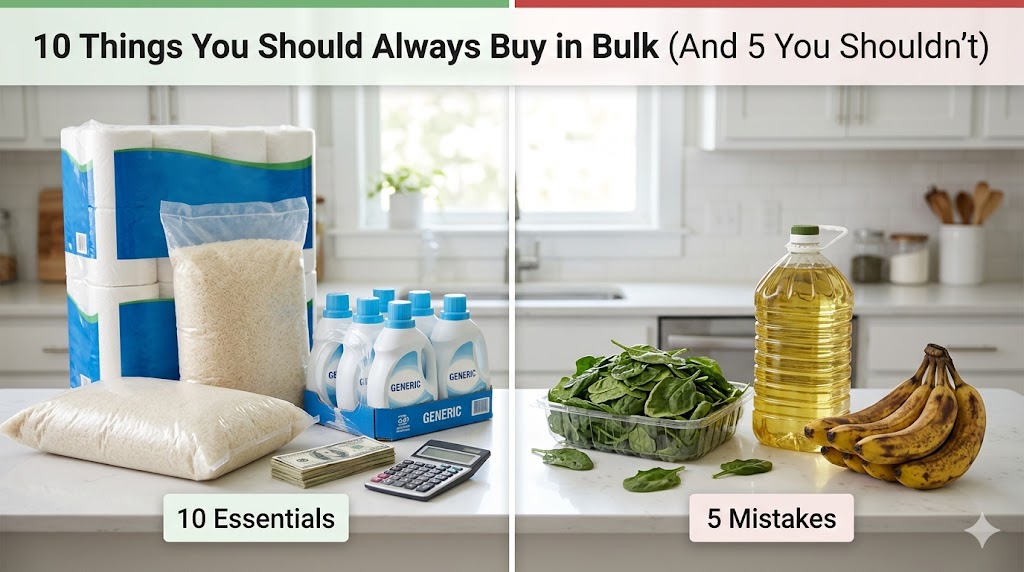
Stepping into a massive warehouse club can feel like crossing the threshold into a consumer wonderland. You are greeted by towering pallets of goods, gallon-sized tubs of mayonnaise, and flat-screen TVs. It is incredibly easy to get swept up in the excitement and convince yourself that buying a 50-pound bag of flour is a brilliant financial move.
But is it?
Here at Wealth Path Daily, we are all about maximizing the power of your paycheck. Buying in bulk is one of the most effective strategies to lower your monthly expenses, fight inflation, and build wealth over time. However, bulk buying is only a smart financial move if you actually use the products before they expire. Buying a mountain of cheap food only to throw half of it in the trash is not saving money—it is wasting it.
To help you navigate the warehouse aisles like a seasoned financial pro, we have compiled the ultimate guide to bulk buying. Here are ten items you should always buy in bulk, and five you should leave on the shelf.
10 Things You Should Always Buy in Bulk
When it comes to these household staples, bigger truly is better. Stocking up on these items will consistently lower your cost-per-use and keep your budget perfectly optimized.
1. Toilet Paper and Paper Towels
These are the undisputed kings of bulk buying. Paper products never expire, they are immune to temperature changes, and you are guaranteed to use them eventually. Buying these in massive quantities will save you a surprising amount of money over a calendar year.
2. Trash Bags
Much like paper products, trash bags do not have a shelf life. The markup on small boxes of trash bags at a standard grocery store is incredibly high. Buy a box of 200 at a warehouse club and cross this annoying expense off your grocery list for the next six months.
3. White Rice and Dried Pasta
If stored correctly in airtight containers in a cool, dry place, white rice and dried pasta can last for years. They form the inexpensive base for hundreds of budget-friendly meals, making them perfect candidates for bulk purchasing.
4. Laundry Detergent
Whether you prefer liquid, pods, or powder, laundry detergent is expensive. Fortunately, it is also highly shelf-stable. Buying the largest container available will drastically reduce your cost-per-load. Just be sure to store liquid detergent at room temperature so it does not separate.
5. Soap and Shampoo
Personal care liquids and bar soaps have very long shelf lives. Buying a giant refill bottle of hand soap or body wash to refill smaller dispensers in your bathroom is an excellent way to slash your toiletries budget.
6. Toothpaste and Toothbrushes
Dentists recommend changing your toothbrush every three to four months. By buying a multipack, you ensure you always have a fresh one on hand, and you pay a fraction of the cost compared to buying single brushes at the pharmacy. The same rule applies to multi-packs of toothpaste.
7. Diapers and Wipes
If you are a parent, you know that diapers and wipes eat up a massive portion of your budget. Buying these in bulk is a financial lifesaver. One important caveat: Babies grow fast. Do not stockpile hundreds of newborn-sized diapers, or your child might outgrow them before you can use them all.
8. Batteries
Standard AA and AAA batteries have a shelf life of anywhere from 5 to 10 years. Because you rely on them for everything from TV remotes to smoke detectors, buying the giant multi-packs makes perfect financial sense.
9. Pet Food (With a Catch)
If you have a large dog or multiple pets that consume food quickly, buying the biggest bag of dry kibble will save you a fortune. However, once opened, dry pet food can go stale or spoil over several months. Only buy the massive bags if your pets will finish them within six to eight weeks.
10. Coffee Beans
For the daily coffee drinker, buying whole beans in bulk is a major money-saver. To keep them fresh, divide the bulk bag into smaller, airtight containers and store the excess in the freezer until you are ready to grind them.
5 Things You Should NEVER Buy in Bulk
The illusion of a “good deal” falls apart completely if the product loses its quality or spoils before you can use it. Avoid buying these items in bulk.
1. Fresh Produce
Unless you are running a restaurant, feeding a family of ten, or planning an intense weekend of canning and preserving, avoid bulk fresh fruits and vegetables. The massive clamshell of spinach might look like a great deal, but if it turns to mush in your crisper drawer, you have lost money.
2. Cooking Oils
It is a little-known fact that cooking oils—including olive, canola, and vegetable oils—go rancid. Once exposed to light and air, oil begins to degrade. Unless you fry food constantly, stick to standard-sized bottles that you can consume within three to six months.
3. Spices
Ground spices do not spoil in a way that makes you sick, but they do lose their potency and flavor after about six months. Buying a massive jug of cinnamon or garlic powder means you will likely be cooking with flavorless dust a year from now.
4. Skincare and Sunscreen
Active ingredients in skincare products and sunscreen degrade over time, losing their effectiveness. An expired bottle of sunscreen will not protect you from UV rays. Buy these items as needed for the current season.
5. Condiments
That gallon-sized tub of mayonnaise or ketchup might seem practical for summer barbecues, but condiments take up prime real estate in your refrigerator and have surprisingly short shelf lives once opened. Stick to regular sizes to avoid tossing half-empty, expired bottles.
Actionable Tips for Smart Bulk Shopping
To make the most of your bulk shopping trips, keep these three essential tips in mind:
- Always Check the Unit Price: Do not just look at the final price tag. Look at the sticker on the shelf for the “price per ounce” or “price per unit.” Sometimes, the grocery store sale price on a regular-sized item is actually cheaper per ounce than the warehouse club’s bulk version.
- Evaluate Your Storage Space: Before you buy 30 rolls of paper towels, ask yourself: Where will this live? If bulk buying clutters your home and causes stress, the financial savings are not worth the mental cost.
- Track Your Consumption Habits: Be brutally honest about your family’s habits. If you only eat rice once a month, a 20-pound bag will just take up space. Only bulk-buy the items you reach for every single week.
Conclusion: Shop Smarter, Keep More Cash
Mastering the art of bulk buying is a cornerstone of smart personal finance. By understanding the difference between a true bargain and a potential waste, you can strategically lower your household expenses without sacrificing quality.
Focus on non-perishables, keep a close eye on the unit price, and resist the temptation of giant containers of food you will never finish. Give every dollar a job, and ensure that when you buy in bulk, those dollars are working hard to protect your wealth path.